
Foxtail millet
Setaria italicaTeluguకొర్రలు KorraluHindiकंगनी KangniTamilதினை ThinaiKannadaನವಣೆ NavaneMarathiराळा Rala
Names: ICAR-Indian Institute of Millets Research; Telugu as on our pack
Ishva packs foxtail millet — on the shelf at DMart.See the product →
Pictures
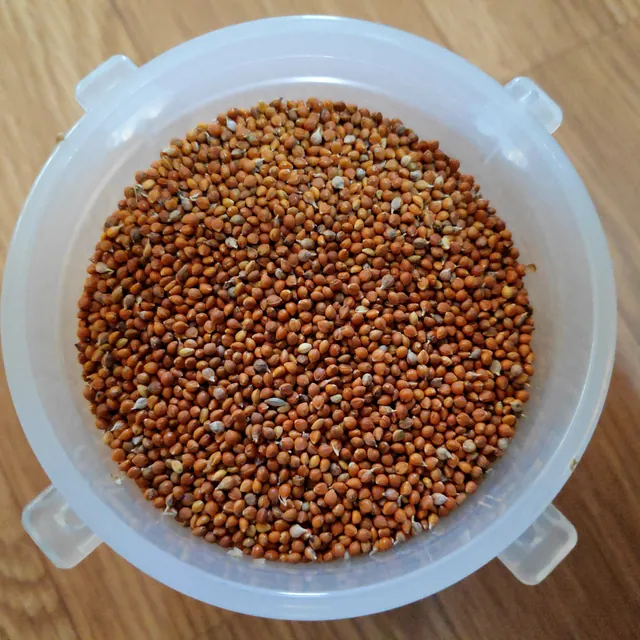
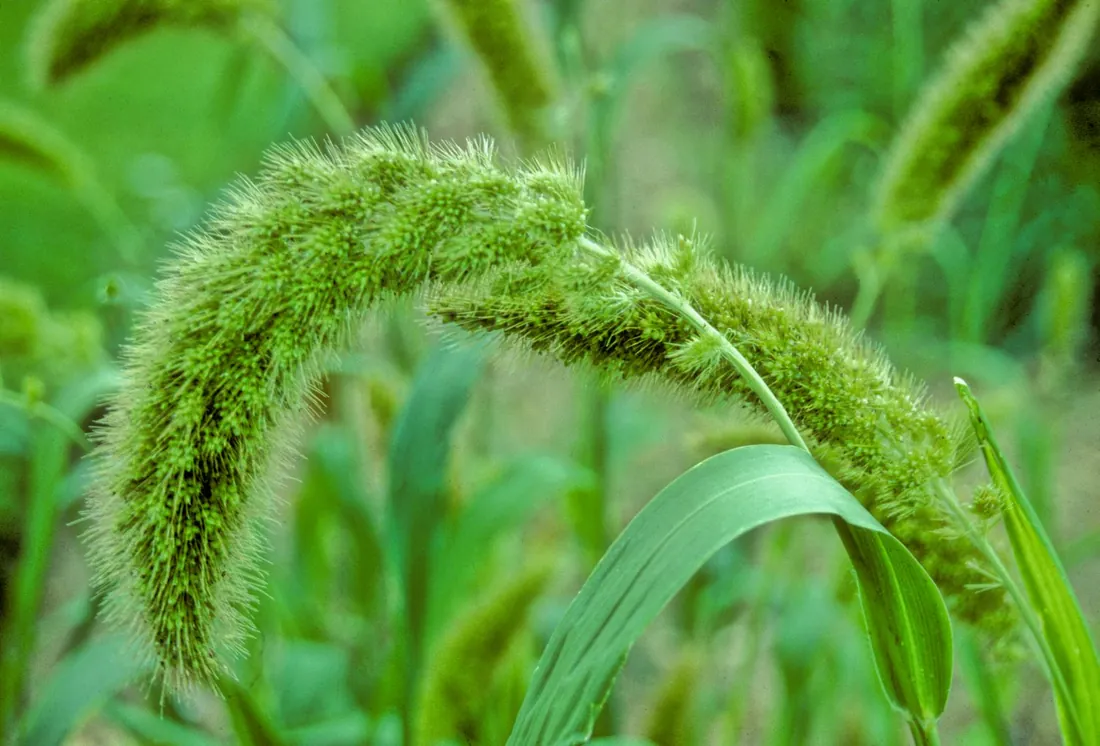
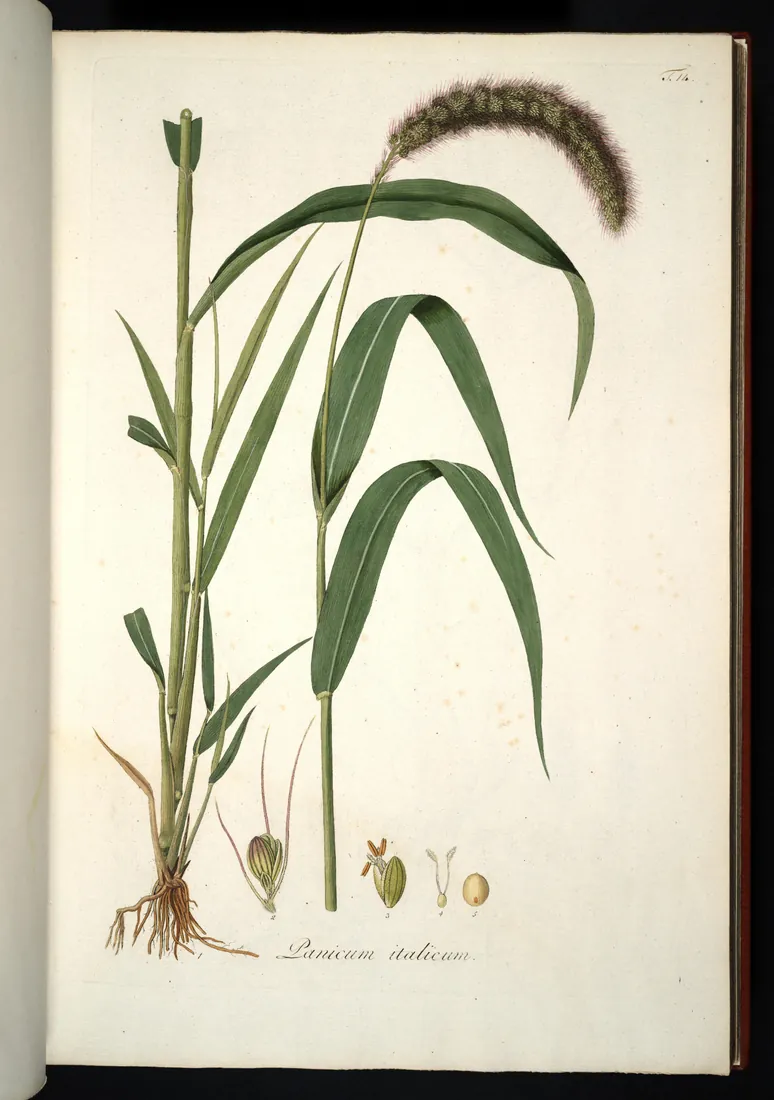
Hear it pour
Our own pack of foxtail millet, opened and poured into a steel bowl — filmed on a phone, nothing added.
Turn the sound on: the grain has its own sound as it falls.
Every nutrient in the raw grain — 13 values, per 100 g
Energy, protein, fat, carbohydrate, fibre4
| Carbohydrate | 60.1 g |
| Protein | 12.3 g |
| Fat | 4.3 g |
| Energy | 331 kcal |
Not detected in this grain (the table leaves it blank or zero): Dietary fibre (total).
Minerals3
| Calcium | 31 mg |
| Phosphorus | 188 mg |
| Magnesium | 81 mg |
Vitamins4
| Thiamine (B1) | 0.59 mg |
| Riboflavin (B2) | 0.11 mg |
| Niacin (B3) | 3.2 mg |
| Folate (B9) | 15 µg |
Source, one for the whole list: NIN Nutritive Value of Indian Foods (2007), as printed in ICAR-IIMR 'The Story of Millets' (2018). Values exactly as the table prints them; published values for the grain, not a laboratory test of our packs. Tap a name for what it is and does.
In the Vedas and Sanskrit texts
- Vajasaneyi Samhita, VS XVIII.12 — A litany for the fire altar lists the grains of the household one by one: rice, barley, beans, sesame, mung, khalva, then priyangu, anu and shyamaka, wild rice, wheat and lentils. Only grains are named; nothing is cooked. (Ralph T. H. Griffith's translation)
- Taittiriya Samhita, TS IV.7.4.2 — The Black Yajurveda version of the same litany. The household grains are listed and the list closes with three millets (Keith gives their botanical names) and wild rice. A list, not a dish. (Arthur Berriedale Keith's translation)
- Taittiriya Samhita, TS II.2.11.4 — The clearest millet dish in the Black Yajurveda: priyangu cooked in milk from a speckled cow, offered as a pot to the Maruts. The Maitrayani and Kathaka Samhitas give the same rite. (Arthur Berriedale Keith's translation)
- Taittiriya Brahmana, TB III.1.4.4 — In the offerings to the lunar mansions, Rudra (for the mansion Ardra) receives a pot of priyangu cooked in milk. (the Sanskrit text)
- Shatapatha Brahmana XIV = Brihadaranyaka Upanishad, SB XIV.9.3.22 = BAU VI.3.13 — The ten cultivated grains, including anu and priyangu, are ground together and moistened with curd, honey and ghee for the mantha rite. It is a ten-grain mash, not a millet dish, and gives no quantities. (F. Max Muller's translation)
- Aitareya Brahmana, AB VIII.16 — For a royal consecration the priests gather young shoots of four plants: rice, large rice, priyangu and barley. Shoots, not a cooked dish. (Arthur Berriedale Keith's translation)
- Apastamba Srauta Sutra, ApSS XVI.19.13 — Seeds of fourteen plants are sown on the fire altar: seven cultivated (with priyangu and anu among them) and seven wild (with shyamaka, wild sesame and gavidhuka among them). (the Sanskrit text)
- Varaha Grihya Sutra, VarGS 14.5 — A list of plants and grains gathered for a rite names shyamaka and priyangu with shami, durva and white mustard. (the Sanskrit text)
- Kausika Sutra, KauśS 8.20 — Defines the "mixed grains" used in its rites: rice, barley, wheat, upavaka, sesame, priyangu and shyamaka. (the Sanskrit text)
- Atharvaveda Parisishta, AVPariś 23.7.2 — Lists the grains whose kernels may be set out for the fire offerings: barley, rice, large rice, priyangu, shyamaka and sesame. (the Sanskrit text)
- Vaikhanasa Dharmasutra, VaikhDS I.7 — A class of hermit feeds his guests on whatever priyangu, barley, shyamaka and wild rice he has gathered. (the Sanskrit text)
Each line is our summary of the passage, with its reference. Health and medicinal statements in these texts are left out.
Where it comes from
- Foxtail millet was first domesticated in northern China, and is grown today in China, India and beyond. (FAO — International Year of Millets 2023) (Yang et al. 2012, PNAS)
In India’s old books
- The Shukla Yajurveda (Vājasaneyi Saṃhitā 18.12) names priyaṅgu among its grains; the Monier-Williams Sanskrit dictionary identifies priyaṅgu as Italian (foxtail) millet. (Vājasaneyi Saṃhitā 18) (Monier-Williams)
- Kauṭilya's Arthaśāstra (2.24.12) lists priyaṅgu with kodrava among the crops sown first in the season. (Arthaśāstra, GRETIL text)
- The Sangam-era Tamil poem Kuṟiñcippāṭṭu by Kapilar (lines 35-39) speaks of tiṉai, which the Tamil Lexicon defines as Italian millet. (Kuṟiñcippāṭṭu, Project Madurai) (Tamil Lexicon)
Recipes
- Foxtail Millet Sweet PongalFestival · Sweet
- Foxtail Millet Adhirasam (Thinai Adhirasam)Festival · Sweet
- Foxtail Millet Ven Pongal (Savoury Pongal)Traditional · Breakfast
- Foxtail Millet Lemon RiceTraditional · Lunch
- Foxtail Millet Raw Mango RiceTraditional · Lunch
- Foxtail Millet Bisi Bele BathTraditional · Lunch
- Foxtail Millet Kajjikayalu (Stuffed Sweet Pastries)Festival · Sweet
- Foxtail Millet Salad with Raw Mango and CucumberModern · Snack
- Thinai Puttu (Sweet Steamed Foxtail Millet)Traditional · Breakfast
- Foxtail Millet, Kidney Bean and Sprout SaladModern · Lunch
- Foxtail Millet Kachori (with Spiced Onion and Potato Filling)Traditional · Snack
- Sticky Millet Cake (Foxtail Millet Boiled in Banana Leaf)Traditional · Snack
- Foxtail Millet KheerTraditional · Sweet
- Thinai Poli (Foxtail Millet Sweet Stuffed Flatbread)Festival · Sweet
- Pasunthinai Mūral (Boiled Fresh Foxtail Millet, from the Perumpāṇāṟṟuppaṭai)Ancient · Lunch