
Kuttu (buckwheat)
Fagopyrum esculentumHindiकूटू Kootu / Kuttu
Names: ICAR-Indian Institute of Millets Research
Pictures
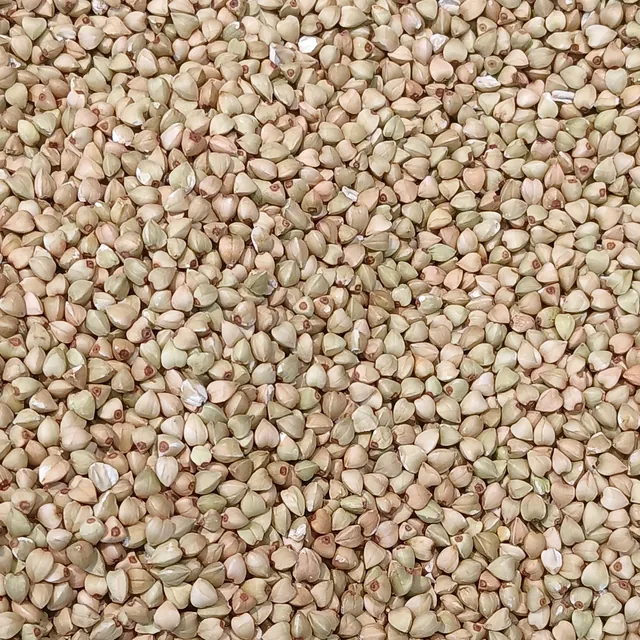
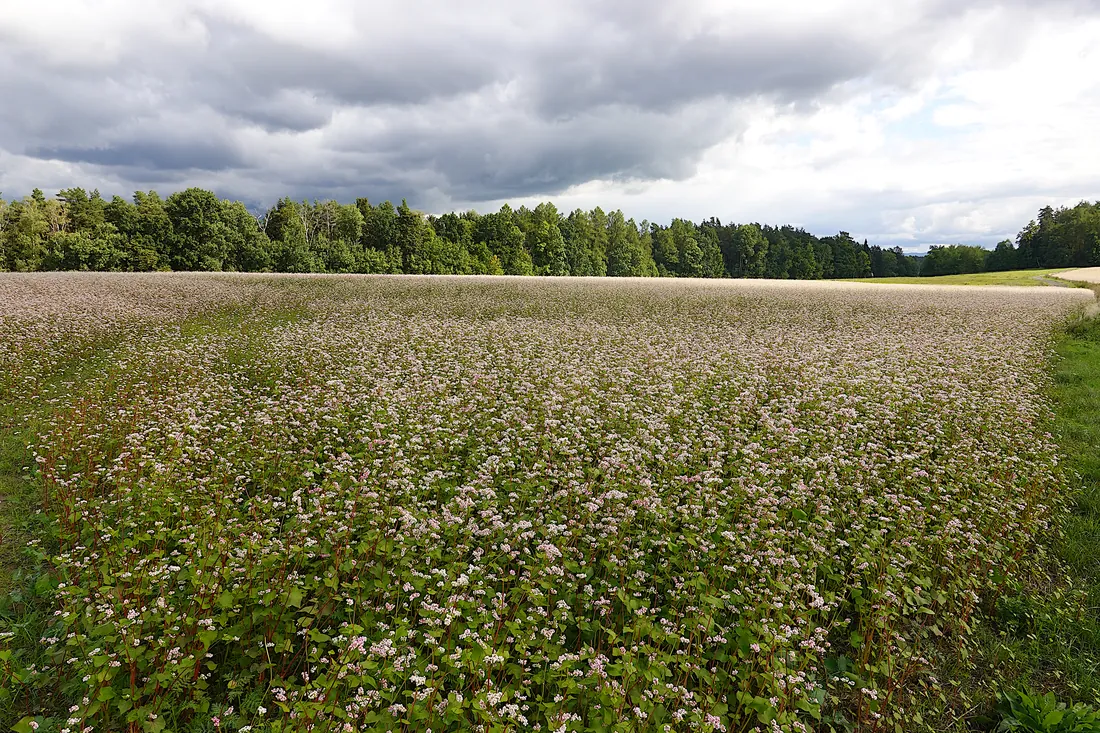
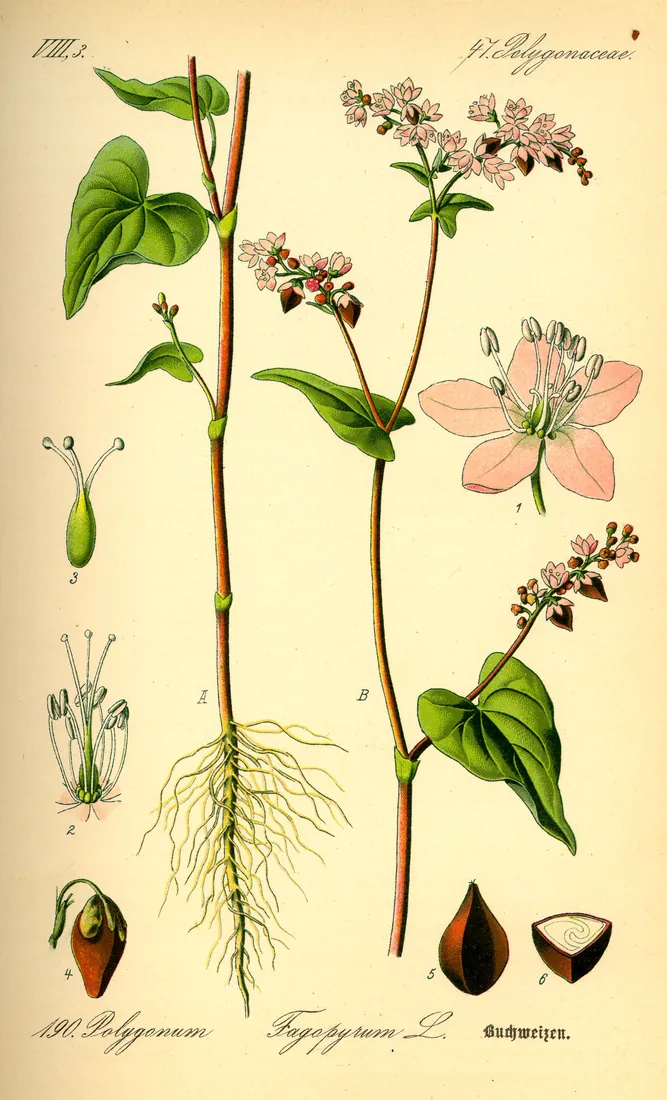
Nutrition of the raw grain, per 100 g
| Energy | 343 kcal |
| Protein | 13.25 g |
| Fat | 3.4 g |
| Carbohydrate (available) | 71.5 g |
| Dietary fibre (total) | 10 g |
| Calcium | 18 mg |
| Iron | 2.2 mg |
| Magnesium | 231 mg |
| Phosphorus | 347 mg |
| Zinc | 2.4 mg |
Source: USDA FoodData Central, SR Legacy, 'Buckwheat' (FDC ID 170286, NDB 20008, published 2019-04-01; read via api.nal.usda.gov).
Every nutrient in the raw grain — 57 values, per 100 g
Energy, protein, fat, carbohydrate, fibre7
| Water (moisture) | 9.75 g |
| Energy | 343 kcal |
| Protein | 13.25 g |
| Fat | 3.4 g |
| Ash (total minerals) | 2.1 g |
| Carbohydrate (incl. fibre) | 71.5 g |
| Dietary fibre (total) | 10 g |
Minerals5
| Calcium | 18 mg |
| Magnesium | 231 mg |
| Phosphorus | 347 mg |
| Potassium | 460 mg |
| Sodium | 1 mg |
Vitamins8
| Thiamine (B1) | 0.101 mg |
| Riboflavin (B2) | 0.425 mg |
| Niacin (B3) | 7.02 mg |
| Pantothenic acid (B5) | 1.233 mg |
| Vitamin B6 | 0.21 mg |
| Folate (B9) | 30 µg |
| Folate, food | 30 µg |
| Folate (dietary folate equivalents) | 30 µg |
Not detected in this grain (the table leaves it blank or zero): Vitamin A (IU).
Amino acids18
| Tryptophan | 0.192 g |
| Threonine | 0.506 g |
| Isoleucine | 0.498 g |
| Leucine | 0.832 g |
| Lysine | 0.672 g |
| Methionine | 0.172 g |
| Cystine | 0.229 g |
| Phenylalanine | 0.52 g |
| Tyrosine | 0.241 g |
| Valine | 0.678 g |
| Arginine | 0.982 g |
| Histidine | 0.309 g |
| Alanine | 0.748 g |
| Aspartic acid | 1.133 g |
| Glutamic acid | 2.046 g |
| Glycine | 1.031 g |
| Proline | 0.507 g |
| Serine | 0.685 g |
Fatty acids14
| Saturated fat (total) | 0.741 g |
| Caprylic acid (C8:0) | 0.035 g |
| Capric acid (C10:0) | 0.018 g |
| Lauric acid (C12:0) | 0.01 g |
| Myristic acid (C14:0) | 0.025 g |
| Palmitic acid (C16:0) | 0.45 g |
| Stearic acid (C18:0) | 0.047 g |
| Monounsaturated fat (total) | 1.04 g |
| Palmitoleic acid (C16:1) | 0.023 g |
| Oleic acid (C18:1) | 0.988 g |
| Erucic acid (C22:1) | 0.012 g |
| Polyunsaturated fat (total) | 1.039 g |
| Linoleic acid (C18:2, omega-6) | 0.961 g |
| Linolenic acids (C18:3, total) | 0.078 g |
Not detected in this grain (the table leaves it blank or zero): Eicosenoic acid (C20:1).
Source, one for the whole list: USDA FoodData Central (SR Legacy). Values exactly as the table prints them; published values for the grain, not a laboratory test of our packs. Tap a name for what it is and does.
Where it comes from
- Common and Tartary buckwheat are Chinese domesticates usually thought to originate in upland southwestern China. (Hunt HV, Shang X, Jones MK)
- Earliest plausibly agricultural buckwheat: northern China, mid-6th millennium cal BP; it probably became pan-Eurasian by the 3rd millennium cal BP, spreading west via the southern Himalaya. (Hunt HV, Shang X, Jones MK)
- In India buckwheat has been cultivated in the higher hills of Himachal Pradesh, Uttarakhand, Jammu & Kashmir, Sikkim and the North-East for centuries; diversity is greater in the Western Himalaya. (Kumar S, Rattan P, Gupta RK, Samnotra RK)
Where it grows
- Grown in high-altitude states: Jammu & Kashmir, Himachal Pradesh, Uttarakhand, Sikkim, Arunachal Pradesh, West Bengal (hills), Meghalaya, Assam, Manipur, Nagaland; also Nilgiris and Palani hills (Tamil Nadu). (Rangappa K et al.)
- Why hill/marginal land: copes with low soil moisture and acid, low-nutrient hill soils. (Rangappa K et al.)
In the kitchen
- In the North-Western Himalaya buckwheat leaves make a local dish called 'phafru'; leaves and young shoots are boiled and eaten like spinach. (Kumar S, Rattan P, Gupta RK, Samnotra RK)
- Buckwheat products are part of the regular diet of some Arunachal Pradesh tribes where rice grows poorly in the cold. (Rangappa K et al.)
Recipes
- Kuttu Beetroot TikkiModern · Snack
- Aktori (Himachali Buckwheat Pancake)Festival · Breakfast
- Kuttu Atta Cookies (Buckwheat Flour Cookies)Modern · Snack
- Kuttu Thalipeeth (Buckwheat and Raw Banana Flatbread)Traditional · Lunch
- Banana, Buckwheat and Oat BarsModern · Snack
- Kuttu, Moong and Vegetable KhichdiTraditional · Dinner
- Buckwheat Groats and Mushroom RisottoModern · Dinner
- Buckwheat Salad with Herbs, Cucumber and Apple DressingModern · Lunch
- Kuttu-Gur Panjiri (Buckwheat and Jaggery Slab)Festival · Sweet
- Buckwheat Coffee and Ginger CakeModern · Sweet
- Buckwheat Pasta with Mushrooms, Broccoli and CornModern · Dinner
- Buckwheat Banana BreadModern · Snack