
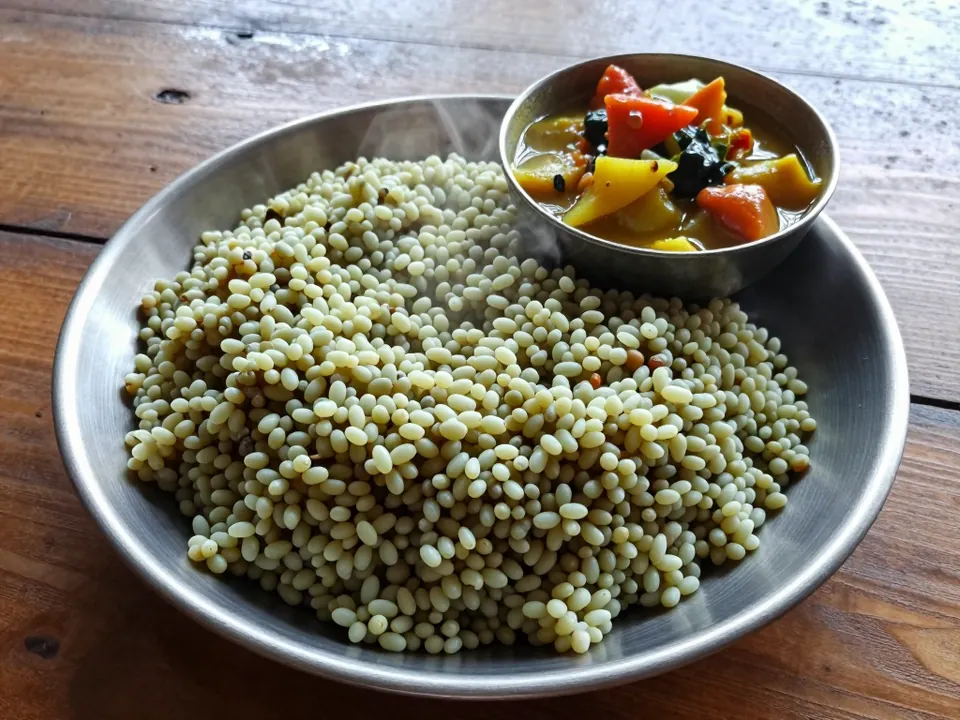
Sajja Kudu (Plain Boiled Whole Bajra)
Cook 40 min · Servings not given in the source
Ingredients
- whole bajra (pearl millet grain) — 1 cup (FAO gives volumes: 1 volume of grain. Dehulled bajra can be used and needs no soaking)
- water, for boiling — 3 to 4 cups (3 to 4 volumes of water to 1 volume of grain (FAO))
- water, for soaking (enough to cover the grain well, as needed)
Method
- Spread the bajra on a plate, pick out any grit, rinse it, then soak it overnight in plenty of water.
- In the morning drain the soaked grain and wash it well under running water.
- Bring 3 to 4 cups of fresh water to the boil for each cup of bajra, then add the grain.
- Cover and cook at a gentle boil until the grains are soft right through, somewhere between 20 and 40 minutes.
- Serve hot in place of rice, with a vegetable curry.
From the old texts
“Water of Naguleru and slate slabs / Millet and sorghum diet / Serpents and scorpions”
నాగులేటి నీళ్ళు నాపరాళ్ళు
సజ్జ జొన్నకూళ్ళు సర్పంబులును తేళ్ళు
పల్లెనాటిసీమ పల్లెటూళ్ళు.
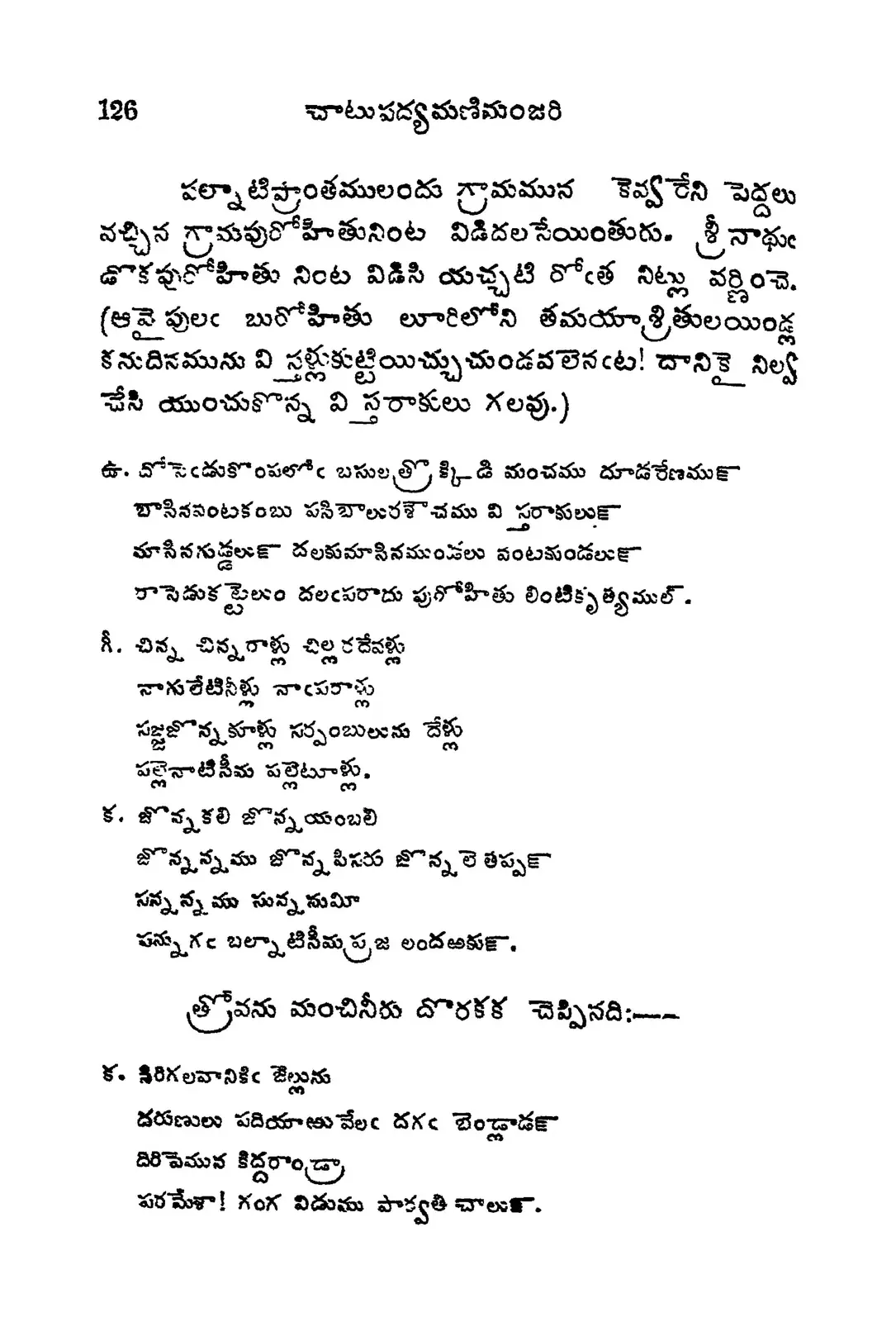 The printed page
Cāṭupadyamaṇimañjari (part 1), ed. Veturi Prabhakara Sastri, 1924 printing (same copy as verse 323) (ed. Veturi Prabhakara Sastri), Madras (Cennapuri): Vavilla Ramaswami Sastrulu & Sons, 1924, p. 126
Attributed to Srinatha in the chatu tradition (Ranjan Babu: 'supposed to have been written by Srinatha'; Chatupadya Manimanjari places it among his Palnadu verses), Chatu (stray) verse on the villages of Palnadu, 'chinna chinna rallu chillara devullu ...' - verse 326 in Chatupadya Manimanjari (late 14th to early 15th century (Srinatha's period, per Narayana Rao and Shulman); the attribution is traditional), Chatupadya Manimanjari, verse 326; English: Ranjan Babu (2000), PDF p. 15 (printed p. 7); a second rendering with the transliteration in note 19, PDF p. 144 (printed p. 136), translated by P. Ranjan Babu — read the translation.
Which grain: “Bajree (Rajasthani, Gujarati, Marathi), Sajje (Kannada), Kambu (Tamil), Sajja (Telugu)” (ICAR-Indian Institute of Millets Research, Latest Millet Production and Processing Technologies (English, 2020), '6. Pearl millet (bajra)', vernacular names)
Amounts and times: the old text gives none, so they are from Sorghum and millets in human nutrition (FAO Food and Nutrition Series No. 27), FAO, Rome, 1995 - Annex: Some recipes based on sorghum and millets, Annex.
Tips
- From the source: FAO says the soaked grain may be steamed instead of boiled, until soft.
- General practice: if some water is still in the pan once the grain is tender, pour it off.
- Grains differ in hardness: cook within FAO's 20 to 40 minutes, until soft.
Adapted from Srinatha (attributed), a chatu verse on Palnadu, PDF p. 15 (printed p. 7); note 19, written in our own words.